
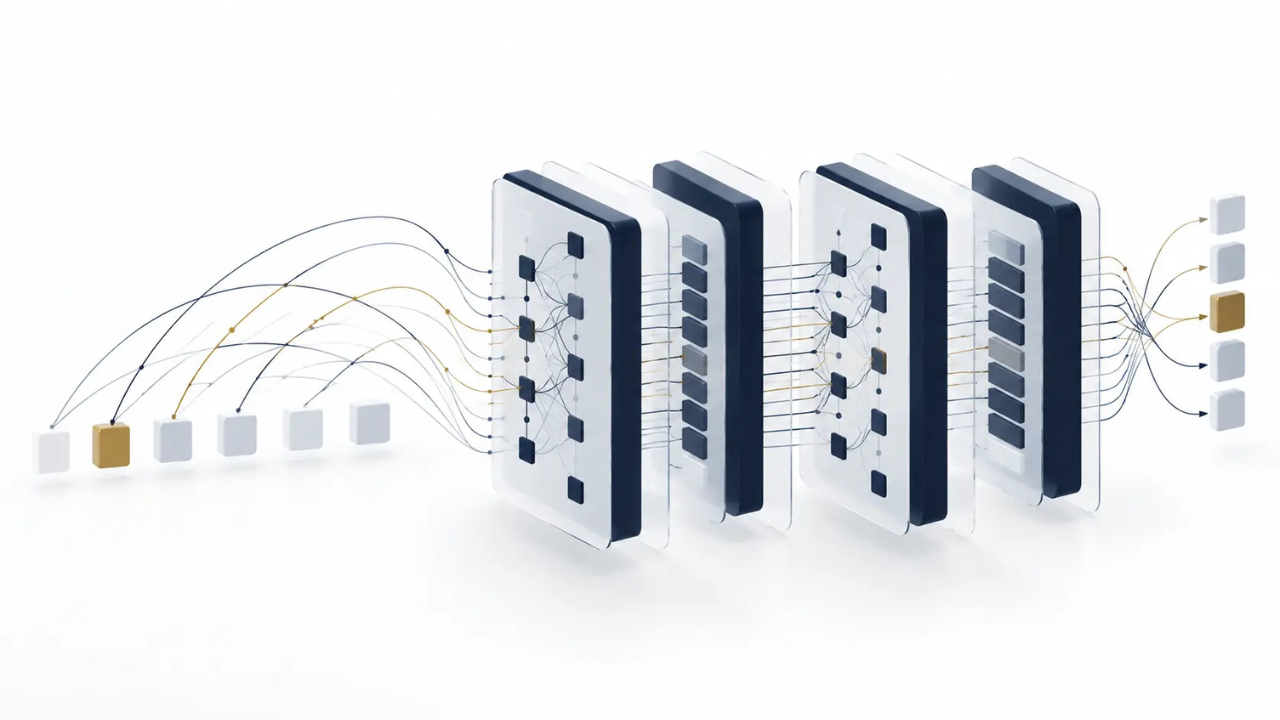
What Are Transformers in AI? How Transformer Models Work
If you have used an AI chatbot, you have probably used a Transformer without knowing it. Transformers are behind many of the language models that power modern AI tools. They help these systems process text, connect information across a sentence and generate useful responses. They are also being used beyond language in areas such as images, speech and multimodal AI.
The word Transformer can sound complicated at first. It is often surrounded by terms such as attention, embeddings, tokens and neural networks. Once those ideas are explained in the right order though, the basic concept is much easier to understand.
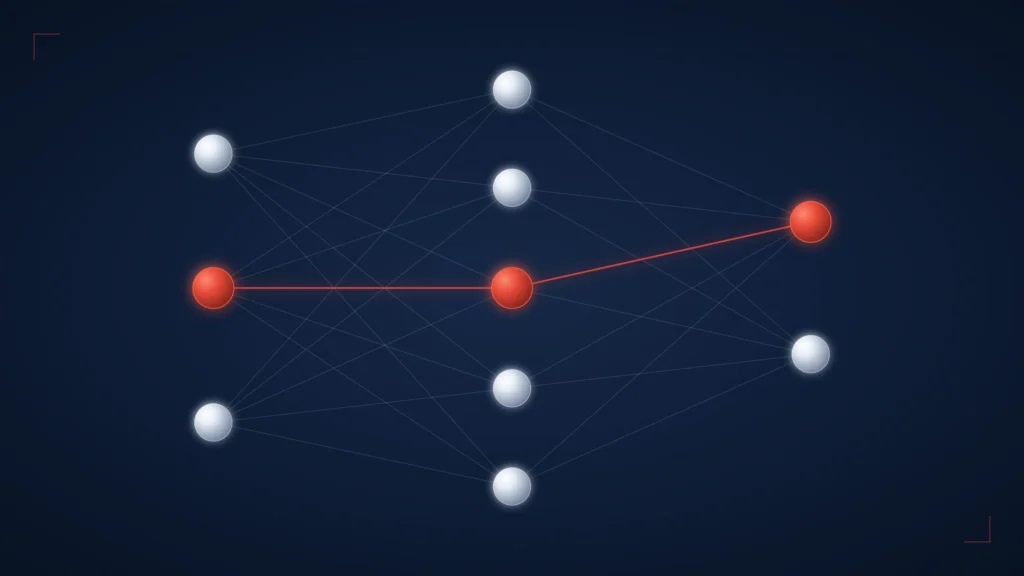
A Transformer is a type of neural network architecture. Its main job is to help a model understand relationships between different pieces of information. That simple idea has had a huge impact on AI. To see why Transformers matter, it helps to first understand where they came from and what problem they were designed to solve.
Why Did Transformers Change AI?
AI Architecture
RNN vs Transformer
Both architectures process sequences, but they handle relationships between tokens in very different ways.
RNN
Processes information step by step
Information moves through the sequence in order. Each step depends on what came before it.
Transformer
Uses attention to connect information
A token can consider other tokens in the sequence and learn which relationships are useful.
RNN
Sequential processing makes the order of computation central to how information moves through the model.
Transformer
Self-attention allows relationships between different positions in the sequence to be modeled directly.
Before Transformers became popular, many language models relied on recurrent neural networks. These models processed a sequence step by step. They would read one part of the input, carry information forward and then move to the next part.
This worked for many tasks but it was not ideal for long sequences. Information from the beginning of a sentence could become harder to carry through many later steps. Training was also difficult to parallelize because one step depended on the previous one. Researchers had already been exploring attention as a way to help models focus on useful parts of an input. In 2017 a team of researchers introduced a new architecture in a paper called Attention Is All You Need. They called it the Transformer.
The big change was that the Transformer did not rely on recurrence as its main way of processing a sequence. Instead it used attention to connect different parts of the input. The original research showed that this approach worked well for machine translation and made much better use of parallel computing during training. That became important as AI models grew larger. Better use of computing power meant researchers could train models on more data and with more parameters. Over time the Transformer became one of the foundations of modern AI.
What Is a Transformer in AI?
A Transformer is a neural network architecture that uses attention to process relationships between parts of a sequence. That definition is technically correct but it does not tell you much on its own. Imagine reading this sentence: “The teacher gave the student a book because it was useful.”
When you read the word “it” your brain naturally looks at the rest of the sentence to understand what it refers to. You are not treating every word as an isolated object. You are using context. Transformers are built around a similar idea. The model can look at the different tokens in a sequence and calculate how much they should influence one another.
This is what makes Transformers so useful for language. A word does not always make sense by itself. Its meaning often depends on the words around it. This connects naturally with the basics of neural networks. A Transformer is still a neural network. What makes it different is the way its components are arranged and the way attention is used to process information.
What Is Attention?
Attention is the idea that some pieces of information are more relevant than others. Suppose a sentence contains twenty words. When the model processes one of those words it does not necessarily need all twenty words to the same degree. Some may be closely related to it while others may have almost no influence.
Attention gives the model a way to calculate those relationships. Think about the sentence “The dog ran to the door when the owner called.” When the model is working with the word “owner” it can examine the other tokens and learn which ones are useful in that context. It can assign more importance to some relationships and less to others.
This happens through mathematical calculations rather than human-like thinking. The model is not consciously deciding what matters. It is using learned weights to determine how information should flow through the network. That is the basic idea behind attention. It sounds simple but it is one of the most important ideas in modern AI.
How Does Self-Attention Work?
The Transformer mainly uses a mechanism called self-attention. Self-attention means that the tokens in a sequence can interact with other tokens in that same sequence. When the model processes one token it can compare it with the others and use that information to create a better representation. The process is commonly explained with three concepts called the query, key and value.
The query represents what a token is looking for. The key provides information that can be used to judge whether another token is relevant. The value contains the information that can then be used if that token receives attention. A simple way to picture this is a search.
You have a question in your mind. That is the query. You compare the question with different pieces of information. Those are the keys. Once you find information that seems relevant you use the actual content. That is the value. The real mathematics is more complex than this example but the basic idea stays the same. The model compares information, calculates relevance and then combines the useful information. That is why attention is so central to Transformers.
Why Do Transformers Need Positional Information?
There is one problem with attention. Words have an order. “The dog chased the cat” and “The cat chased the dog” contain the same words. The meaning changes because the order changes. A Transformer therefore needs some way to represent position.
The original Transformer used positional encodings. These gave the model information about where a token appeared in the sequence. Without some form of positional information the model would have a much harder time understanding the difference between different word arrangements.
Modern Transformer models can use different ways to represent position. The exact method has changed over time but the reason for using positional information remains the same. The model needs to know more than which tokens are present. It also needs to understand something about where they appear.
What Happens Inside a Transformer?
A Transformer is made from layers. These layers are often called Transformer blocks. Each block processes the information and passes a new representation to the next block. As the information moves through the network the model can build more detailed relationships between the tokens.
Attention is one part of the process. The model also uses feed-forward neural networks to transform the information further. Residual connections help information move through the network. Normalization helps keep the training process stable. The original Transformer had an encoder and a decoder. Modern models do not all use that exact design. Some use only the encoder. Others use only the decoder.
The architecture has also changed in many other ways as researchers have improved it. This is important because the word Transformer now refers to a whole family of related designs rather than one fixed model. You can think of the original Transformer as the starting point for a much larger family of AI systems.
How Does a Transformer Process Text?
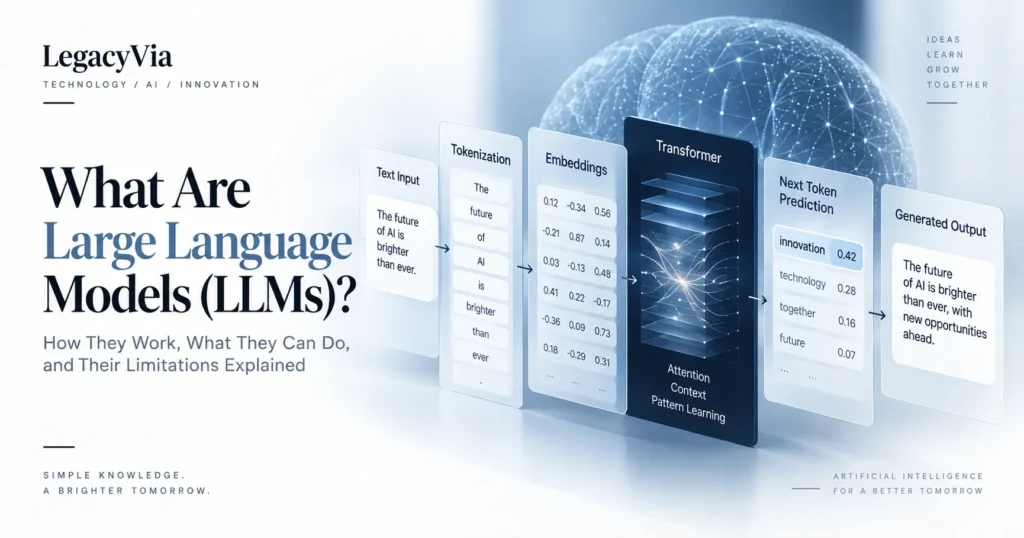
Before a model can process a sentence it needs to turn that sentence into numbers. The first step is called tokenization. The text is split into smaller pieces called tokens. A token may be a complete word. It may also be part of a word or a punctuation mark.
The tokens are then converted into numerical vectors called embeddings. These vectors give the neural network a mathematical representation that it can work with. Positional information is added so the model can account for order. The representations then move through the Transformer layers.
Inside those layers attention helps the model work out how the tokens relate to one another. This is where Transformers became especially important for natural language processing. Language is full of relationships. A word can depend on another word several positions away. A sentence can depend on the meaning of an earlier sentence. Attention gives the model a powerful way to represent these relationships. The process is much more complicated inside a real model but this gives you the basic picture.
How Does a Transformer Generate Text?
The process becomes especially interesting when the Transformer is used inside a generative language model. Suppose you type: “The capital of France is” The model looks at the available context and predicts what token is most likely to come next. “Paris” would be a very likely choice.
After that token is produced it becomes part of the context. The model then predicts the next token. This happens again and again until the answer is finished. This is why modern language models can generate paragraphs one piece at a time.
What looks like one complete answer is actually the result of many predictions made in sequence. The Transformer is responsible for processing the context that helps make those predictions possible. This is one reason Transformers are so closely connected with large language models.
What Are Encoder-Only Transformers?
Not every Transformer is designed to generate text. Some Transformer models are mainly built to understand input rather than produce long pieces of new text. These are often called encoder-only models. BERT is a well-known example. It uses the Transformer encoder and was designed to build rich representations of language by looking at context in both directions.
This type of model can be useful for tasks such as text classification, question answering and language understanding. The important point is that a Transformer does not automatically mean text generation. The architecture can be adapted for different goals.
What Are Decoder-Only Transformers?
Decoder-only Transformers are designed for autoregressive generation. That means the model predicts the next token based on the tokens that came before it. GPT-style models use this general approach.
If the model receives the beginning of a sentence it predicts the next token. That token becomes part of the input and the model predicts another token. The process continues until the response is complete.
This design became extremely important as large language models grew in size and capability. It is also why Transformers became so closely associated with the AI chatbots that became widely popular in recent years.
What Are Encoder-Decoder Transformers?
The original Transformer used both an encoder and a decoder. This design is useful when a model needs to transform one sequence into another. Machine translation is a good example.
The encoder reads the source sentence and builds a representation of it. The decoder then uses that information to generate the translated sentence. The decoder can also use cross-attention to look at the information produced by the encoder.
This approach remains useful for tasks where the input and output are connected but are not the same sequence. So when people talk about Transformer models they are not talking about one single type. Encoder-only, decoder-only and encoder-decoder models can all be considered part of the Transformer family.
Why Are Transformers Better Suited to Large AI Models?
It would be too simple to say that Transformers are simply “better” than every older architecture. Their real advantage comes from how well they work with modern computing and large-scale training.
Traditional recurrent models have a strong sequential dependency. Transformers can process many relationships in parallel during training. This allows modern hardware to handle the work more efficiently. Transformers also provide a direct way to model relationships across a sequence. A token does not have to rely only on information passed through a long chain of previous steps.
This combination became extremely valuable as the scale of AI systems increased. The broader field of deep learning had already shown that larger neural networks could learn powerful patterns from large datasets. Transformers provided an architecture that could take advantage of that trend.
How Are Transformers Connected to Machine Learning?
Transformers are part of the larger machine learning landscape. Machine learning is the broader idea of training computers to learn patterns from data instead of programming every rule by hand. Deep learning takes that idea further through multi-layer neural networks.
Transformers are one architecture within deep learning. This relationship is useful to understand because AI terms often get mixed together. Machine learning is not the same thing as deep learning. Deep learning is not the same thing as Transformers. And Transformers are not the same thing as LLMs.
They are connected layers of the same larger technology stack.Understanding that structure makes the subject much less confusing.
What Is the Difference Between a Transformer and an LLM?
A Transformer and a large language model are not the same thing. A Transformer is an architecture. An LLM is a trained model that is designed to work with language at large scale. A useful comparison is a building.
The architecture is the design. Training is the process of putting knowledge and capability into the system. The final model is the result. Modern LLMs commonly use Transformer-based architectures. Their training then teaches them patterns from large amounts of data.
This is why learning about network types can be helpful. It shows that there are many neural network architectures and each one is designed around different problems. Transformers are important because they proved especially effective for large-scale language tasks.
Why Did Transformers Become So Important to Generative AI?
Generative AI can create new content such as text, code, images and audio. Transformers played a major role in the rise of generative AI because they provided a strong architecture for language generation.
Once researchers learned how to train increasingly large Transformer models on large datasets the capabilities of language systems improved rapidly. The model could learn patterns in grammar and language structure. It could also learn relationships between concepts and pieces of information found in its training data.
This helped create systems that can write text, answer questions, summarize documents and generate code. Still, Transformers are only one part of modern generative AI. Training data, optimization, hardware, model design and post-training methods all play important roles. The Transformer was the architecture that gave many of these systems a powerful foundation.
Can Transformers Understand Context?
Yes. Context is one of the main reasons Transformers are so useful. A word can have different meanings depending on the words around it. Consider the word “bank.” In one sentence it can refer to a financial institution. In another it can describe the edge of a river.
A model needs to consider context to understand which meaning is more likely. Self-attention helps with this because the model can connect information across the sequence. This does not mean the model understands context exactly like a human. It means the architecture gives it a powerful way to represent relationships between tokens and use those relationships when producing an output.
That difference is important when talking about modern AI.
What Are the Main Limitations of Transformers?
Transformers are powerful but they still have important limits. One major challenge is computational cost. Standard self-attention compares many tokens with one another. As the amount of text grows the amount of computation and memory can increase quickly.
This becomes a problem when models need to work with very long documents or conversations. Researchers are constantly developing new methods to make attention more efficient. Another challenge is accuracy.
A Transformer-based language model can generate text that sounds completely natural while still being wrong. The model is very good at predicting patterns in language but that does not guarantee that every fact it produces is true. Large models can also be expensive to train. They require large datasets, powerful hardware and a great deal of computing.
These limitations do not make Transformers unimportant. They show that the architecture is still part of an active area of research.
Are Transformers Only Used for Language?
No. Language is probably the most familiar use of Transformers but the architecture has spread into other areas. Researchers have developed Transformer-based systems for computer vision. Instead of working with words these models can represent parts of an image as a sequence and use attention to model relationships between them.
Transformers are also used in speech and audio systems. More recently they have become important in multimodal AI. These systems can work with more than one type of information such as text and images.
This wider use shows why Transformers are more than just the technology behind chatbots. They are a general architecture that can be adapted to different types of data.
Why Is 2017 So Important in Transformer History?
The year 2017 is an important point in the AI history of modern machine learning. That was the year the Attention Is All You Need paper introduced the original Transformer architecture. The idea was built on years of earlier research. Attention itself was not new. Neural networks were not new. Sequence-to-sequence learning was not new.
What changed was the way these ideas were combined. The Transformer made attention the central mechanism for sequence processing and showed that a model could perform strongly without relying on recurrence as its main architecture.
The work influenced a long line of later models and helped create the technical foundation for much of the modern language-model ecosystem. That is why the Transformer is often described as a turning point in modern AI.
Do Transformers Think Like Humans?
No. This is worth making clear because modern AI can sometimes appear almost human when it writes or speaks. A Transformer does not have human experiences or a human mind. It processes numerical representations through learned mathematical operations. During training its parameters are adjusted so that it becomes better at predicting patterns in its data.
The output can be remarkably sophisticated. That does not mean the underlying process is the same as human thought. A model can generate a convincing explanation without experiencing the concept it is explaining. It can produce fluent language without having personal memories or consciousness.
Understanding this difference helps us appreciate what Transformers actually do rather than giving them human qualities they do not have.
What Should You Remember About Transformers?
You do not need to memorize every technical detail to understand why Transformers matter. The central idea is simple. A Transformer is a neural network architecture that uses attention to model relationships between pieces of information.
Attention helps the model determine which parts of a sequence are relevant to one another. Positional information helps it account for order. Multiple Transformer layers then process the information and build increasingly useful representations. Different Transformer models can be designed for different jobs. Some are focused on understanding. Some are designed for generation. Others use both an encoder and a decoder.
Modern LLMs are one of the most important applications of Transformer technology but they are not the architecture itself. Once you understand that distinction the modern AI landscape becomes easier to follow.
The Future of Transformer Models
Transformers have already changed AI but the story is not finished. Researchers are still working on better attention mechanisms, longer context, faster inference and more efficient training. They are also exploring how different architectures can work together.
The future may still be heavily based on Transformers. It may also bring architectures that improve on parts of the current approach. What is more important is the problem Transformers helped us solve.
AI systems need to deal with relationships between huge amounts of information. They need to understand context. They need to connect different types of data and use that information efficiently. Transformers gave researchers a powerful way to approach that problem.
As the future of AI continues to develop, understanding Transformers will remain useful because many of the systems shaping the next generation of AI are built from ideas that started here.
Frequently Asked Questions About Transformers
What is a Transformer in AI? A Transformer is a neural network architecture that uses attention to process relationships between pieces of information. It was introduced in the 2017 paper Attention Is All You Need.
Why are Transformers important? Transformers made it easier to model relationships across sequences and use modern computing hardware efficiently during training. This helped make large-scale AI models much more practical.
Is a Transformer the same as an LLM? No. A Transformer is an architecture while an LLM is a trained language model. Many modern LLMs use Transformer-based architectures.
What is self-attention? Self-attention allows tokens within the same sequence to interact with one another. The model calculates which relationships are useful and uses that information to build better representations.
What are query, key and value? They are three parts of the attention mechanism. The query represents what information is being sought. The key helps determine relevance. The value contains the information that can be used.
Why do Transformers need positional information? Because word order matters. Positional information helps the model distinguish between different arrangements of the same tokens.
Is BERT a Transformer? Yes. BERT is based on the Transformer encoder architecture and was designed for language understanding tasks.
Are GPT models Transformers? GPT-style models use decoder-based Transformer architectures and generate text through autoregressive next-token prediction.
Are Transformers only used for text? No. Transformer architectures are also used in computer vision, speech, audio and multimodal AI.
Do Transformers really understand language? Transformers can model language patterns and context extremely well. That does not mean they understand language in exactly the same way a human does.
Final Thoughts
Transformers can seem difficult because AI research uses a lot of technical language to describe them. The basic idea is much easier. A Transformer allows a neural network to look at relationships between different pieces of information. Instead of treating every token as an isolated object the model can use attention to understand how those tokens connect.
That changed the direction of AI. It helped researchers move beyond the limits of older sequence models and build systems that could take advantage of larger datasets and more powerful hardware. It also created a foundation for many of the language models and generative AI systems that people now use every day.
The most important thing to remember is that a Transformer is not a chatbot. It is not an LLM and it is not generative AI by itself. It is an architecture. Once that architecture is combined with large amounts of training data and modern training methods it can become part of a very capable AI model.
That is why Transformers matter. They are one of the key ideas that connect the older world of neural networks and deep learning with the AI systems we are seeing today.
Source
- Attention Is All You Need — arXiv
- Attention Is All You Need — Google Research
- BERT: Pre-training of Deep Bidirectional Transformers for Language Understanding — arXiv
- Exploring the Limits of Transfer Learning with a Unified Text-to-Text Transformer (T5) — arXiv
- Hugging Face Transformers Documentation
- Hugging Face — Tasks Explained
- Hugging Face — How Transformers Work
- Google Research — Transformer: A Novel Neural Network Architecture for Language Understanding



3 thoughts on “What Are Transformers in AI? How Transformer Models Work”